In Part 2 Michael Fredholm von Essen looks at the circumstances that led Temuchin to change Nomad strategy and create the greatest land empire in history. He then examines the causes of the downfall of nomad military superiority, of which gunpowder was the chieftest. Get Full text VERSION 1 in PDF Get Full text VERSION […]
Central Asia
THE RISE AND FALL OF NOMAD MILITARY POWER, PART 1: c. 1000 BC – 1200 AD
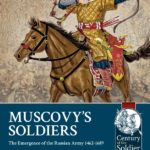
MUSCOVY’S SOLDIERS. THE EMERGENCE OF THE RUSSIAN ARMY 1462-1689
The book describes and analyses the emergence of the early modern Russian army, before the military reforms introduced by Tsar Peter the Great brought it in line with developments in Western Europe. It will be shown that Tsar Peter’s reforms, although decisive, rested on a legacy of previous reforms. Yet, the origin of the early […]
Transnational Organized Crime and Jihadist Terrorism
This book describes and analyzes the convergence of transnational organized crime and jihadist terrorism that has taken place within Russian-speaking social networks in Western Europe. Studies have shown that while under certain circumstances links between criminal organizations and terrorist groups appear, these are usually opportunistic and temporary in nature. Only rarely do they develop into […]
The Threat to Energy Infrastructure in the Central Eurasia from Terrorist Groups Affiliated to ISIL
In 2015, the Islamic State of Iraq and the Levant (ISIL) announced the establishment of its Khorasan Province, said to encompass “Afghanistan, Pakistan, and other nearby lands.” Soon after, ISIL proclaimed its Caucasus Province. However, the war in Syria and Iraq is going badly for ISIL. Losing ground in its heartland, ISIL fighters will have […]
UZBEK ISLAMIC EXTREMISTS IN THE CIVIL WARS OF TAJIKISTAN, AFGHANISTAN, AND PAKISTAN: FROM RADICAL ISLAMIC AWAKENING IN THE FERGHANA VALLEY TO TERRORISM WITH ISLAMIC VOCABULARY IN WAZIRISTAN
Michael Fredholm (Stockholm University) analyzes the activities of Uzbek Islamic extremists and finds that, although their Islamic rhetoric has little theological content and is outweighed by their belief in the righteousness of their cause and that salvation can be assured by armed violence in the name of the religious duty of holy war (jihad), they […]
STRATEGIES OF ENERGY AND SECURITY IN CONTEMPORARY EURASIA
Few topics are more susceptible to heated public debate than the risks associated with the energy sector and energy security. Public debate on energy issues is often made yet more convoluted by the fact that political scientists from government and think-tanks not only have a different outlook and employ different analytical methods than industry analysts, […]
UNDERSTANDING CHINA’S POLICY AND INTENTIONS TOWARDS THE SCO
Among the world’s great powers, China is one of those which arguably are most difficult to assess with regard to ultimate political intentions. The difficulties were voiced by the United States Ambassador to China, Gary Locke, who noted “that there is a concern, a question mark, by people all around the world and governments all […]
STRATEGIES OF ENERGY AND SECURITY IN CONTEMPORARY EURASIA: VULNERABILITIES AND OPPORTUNITIES IN RUSSIA’S ENERGY RELATIONSHIP WITH EUROPE, CENTRAL ASIA, AND CHINA
Few topics are more susceptible to heated public debate than the risks associated with the energy sector and energy security. Public debate on energy issues is often made yet more convoluted by the fact that political scientists from government and think-tanks not only have a different outlook and employ different analytical methods than industry analysts, […]
SPECIAL REPORT, CENTRAL ASIAN SECURITY CHALLENGES: 2012 AND BEYOND
Afghanistan plays a pivotal role in Central Asia’s regional instability due to its weak central government, poor economy, and ethnically diverse population. Although Afghanistan contains important natural resources, the country still faces a number of problems, each of which has the potential to destroy the Afghan government after the pull-out of international military forces. Central […]
UZBEKS AND KAZAKHS – HEROIC NOMAD WARFARE: AN EPIC AND A FILM
Could early modern warfare ever be called heroic? Did heroic warfare exist in at least non-Western societies? During the second half of the twentieth century, some historians and anthropologists attempted to recreate what early warfare really was like through the use of oral history, in those few societies where such traditions still remained… Get […]
ПУСТЫЕ ДУШИ – ЗИЯНИЕ, КОТОРОЕ ДОЛЖНО БЫТЬ ЗАПОЛНЕНО
Современный джихадист часто живет на Западе, возможно вторым поколением эмигрантов или как обращенный, или в другой светской общине где-нибудь в постсоветской Средней Азии. Чаще всего он не знаком с арабским и не является мусульманином. Для него религия и идеология – скорее оправдание задним числом легитимности агрессивных действий и эффект джихадизма, а не его причина. Для […]
A NARRATIVE OF HEROES: IN THE HEAD OF THE CONTEMPORARY JIHADIST
The contemporary jihadist often lives in the West, perhaps as a second-generation immigrant or convert, or in another fairly secular environment such as post-Soviet Central Asia. He likely knows little or no Arabic, and is not an Islamic scholar. For him, religion and ideology are primarily used as an after-the-fact justification and legitimization for violent […]
The Shanghai Cooperation Organization and Eurasian Geopolitics
First study to properly treat a key regional grouping in Asia. Explores both security and energy issues across the region. Considers geopolitical obstacles to the SCO’s long-term viability. The Shanghai Cooperation Organization (SCO) has developed into a key regional security group in Asia, its member states representing no less than “half of humanity”. Alarmists believe […]
Kazakhstan’s Energy Sector and the Political Legacy of Nursultan Nazarbayev
The two-decade-long reign of President Nursultan Nazarbayev of Kazakhstan has witnessed remarkable achievements. Where there at first was no real country, only a vast expanse inhabited by a majority of Slavic settlers, a minority of native Kazakhs (no more than 20% according to the 1959 census) and a large population of disparate nationalities exiled there […]
GLOBALIZATION AND EURASIA’S ENERGY SECTOR
Globalization has brought new vulnerabilities and opportunities in Eurasia’s energy sector. The effects of globalization particularly concern Russia’s energy relationships with Europe, Central Asia, and China. In the transition from the command economy of the Soviet period to the market economy of the present, the Russian energy industry gradually changed its strategy. Central Asia is […]
THE LEGACY OF NURSULTAN NAZARBAYEV: WILL THE 2010 OSCE CHAIRMANSHIP MAKE KAZAKHSTANI PRESIDENT NAZARBAYEV GO DOWN IN HISTORY AS REFORMER OR DESPOT?
The twenty-year reign of President Nazarbayev of Kazakhstan has seen his country develop through independence and transition into a haven of social and political stability. At the same time, Nazarbayev has presided over constitutional and political changes that have emasculated most of the political opposition and brought in restrictive media legislation. With Kazakhstan currently holding […]
FROM THE FERGHANA VALLEY TO WAZIRISTAN AND BEYOND: THE ROLE OF UZBEK ISLAMIC EXTREMISTS IN THE CIVIL WARS OF TAJIKISTAN, AFGHANISTAN, AND PAKISTAN
Uzbek proponents of Islamic extremism have played an important role as foreign participants in the civil wars of Tajikistan and Afghanistan and the present conflict between Pakistani Taliban and security forces in the tribal areas of Pakistan. Their close links to international jihadist networks such as the Al-Qaida and, at times, considerable income from sources […]
Central Asian Sunni Islamic Extremism and Its Links to the Gulf
In 1995, Sunni Islamic extremism – of the type usually referred to as Wahhabism – emerged as a disruptive political force in Chechnya. The dynamics of this are well understood. So is the fact that spillover from this conflict has touched the Gulf region, in the form of terrorism as well as unasked-for problems in […]
NATURAL-GAS TRADE BETWEEN RUSSIA, TURKMENISTAN, AND UKRAINE: AGREEMENTS AND DISPUTES
1. Since independence, Ukraine’s dependence on cheap natural gas, either from Russia or at least transited through Russia, in combination with Russia’s need to export natural gas to western Europe, has consistently caused disturbances in the relations between the two countries. 2. Russia depends on Ukraine, for the transiting of natural gas primarily aimed for […]
THE WORLD OF CENTRAL ASIAN OIL AND GAS: POWER POLITICS, MARKET FORCES, AND STEALTH PIPELINES
1. Central Asia is beginning to see a genuine move away from barter deals towards commercial deals in accordance with market forces. 2. Contrary to much perceived wisdom, in Central Asia it is Gazprom, Russia’s natural gas export monopoly, that is leading the way in the movement towards market forces. 3. Central Asian natural gas […]
ISLAM AND MODERNITY IN CONTEMPORARY CENTRAL ASIA – RELIGIOUS FAITH VERSUS WAY OF LIFE: A STORY OF FOUR RADICAL DISRUPTIONS
What Makes Central Asian Islam Central Asian? In March 2005, an Afghan deputy minister of the interior (who out of mercy will remain unnamed) was touring Europe. At one stop, he suddenly found himself faced with a question that obviously took him by surprise. How long, an innocent but assuredly well-meaning European asked, had Afghanistan […]
THE SHANGHAI COOPERATION ORGANIZATION: THE LATEST CHAPTER IN THE HISTORY OF THE GREAT GAME OR THE GUARANTOR OF CENTRAL ASIAN SECURITY?
Russia remains the key guarantor of security in Central Asia, but the Shanghai Cooperation Organization (SCO), of which Russia and China are the leading members, may have the potential eventually to assume this role. However, a number of serious issues will hamper continued cooperation. First, there is a lack of common values among the SCO member states. In […]
GAZPROM IN CRISIS: PUTIN’S QUEST FOR STATE PLANNING AND RUSSIA’S GROWING NATURAL GAS DEFICIT
Putin and Energy Policy Russia’s president, Vladimir Putin, has never made a secret of his views on energy security, and the policy documents issued by the Kremlin for obvious reasons correspond to his views. Most important among these documents is the Russian energy strategy, approved on 23 May 2003 and confirmed by the Russian government […]
ISLAMIC EXTREMISM AS A POLITICAL FORCE: A COMPARATIVE STUDY OF CENTRAL ASIAN ISLAMIC EXTREMIST MOVEMENTS
Islam in Central Asia does not constitute a uniform religious, social, or political force. While all titular Central Asian ethnic groups, i.e., the nations that states were named after, eventually embraced Islam, the religion did not penetrate the traditional cultures and social systems of these groups to an equal extent. While the sedentary groups generally […]
REVOLT AND REPRESSION IN UZBEKISTAN: THE DILEMMA OF WESTERN RESPONSE
The forceful suppression of revolt in Andijan shocked but also alarmed most international observers and seasoned politicians: the loss of hundreds of innocent lives was appalling but the involvement of Islamist networks was worrisome indeed. Moscow, in contrast, expressed unambiguous support to the ‘friendly Uzbek government’ and added more criticism to Western NGOs that were […]
RUSSIA AND CENTRAL ASIAN SECURITY
Russia remains the key guarantor of security in Central Asia, despite often heard claims that the United States has assumed this position. However, Russia regards Central Asia as of far less priority than her relations with the United States, Europe, and China. By the end of the Soviet era, Central Asia was considered an economic […]
GUNPOWDER AND THE END OF NOMAD MILITARY POWER: THE MILITARY REVOLUTION THAT REALLY MATTERED
Most academics working on the military revolution have focused their attention on Western Europe. This Eurocentric view is perhaps understandable, since many indeed seem to be more interested in the Rise of the West than in purely military affairs elsewhere. However, while the European strategists of the sixteenth to eighteenth centuries, being chiefly concerned with […]
NOMAD EMPIRES & NOMAD GRAND STRATEGY: THE RISE AND FALL OF NOMAD MILITARY POWER, c. 1000 BC – AD 1500
Most history was always written from the perspective of great empires such as Rome, Persia, and China. For them, and their historians, the nomads of the Eurasian steppes were little more than savage troublemakers. Nomads of different tribes and lineages were also hard to distinguish from one another. Few imperial commentators went farther than merely […]
THE RUSSIAN ENERGY STRATEGY & ENERGY POLICY: PIPELINE DIPLOMACY OR MUTUAL DEPENDENCE?
The energy needs of the world are growing fast, and competition for energy is on the rise. Not only hydrocarbon (crude oil and natural gas) resources are at stake, but also the means of electricity production and indeed most other sources of energy. China and India may both need to double their oil requirements in […]
THE GREAT GAME IN INNER ASIA OVER TWO CENTURIES
Around 1800, three great powers faced each other in Inner Asia: Britain, Russia, and the Manchu empire. The West referred to the latter as China, given that China since the seventeenth century formed the economically most important part of the Manchu empire. The Manchus were in decline, but they remained sufficiently strong to control the […]
Hot och hotbilder 2004 (in Swedish)
I dessa dagar talar man ofta om hot och framförallt hotbilder. Det kan vara personliga hotbilder, till exempel riktade mot en viss minister. Eller det kan vara nationella hotbilder, riktade mot hela landet. Under det kalla kriget såg svenska myndigheter en tydlig hotbild i form av Sovjetunionen. Under tidigare århundraden upplevdes på samma sätt det […]
UZBEKISTAN & THE THREAT FROM ISLAMIC EXTREMISM
Can Islamic Extremists Overthrow The Karimov Government? That repression of the political opposition is a fact of daily life in Uzbekistan, together with a weak Soviet-style economy and falling living standards for substantial segments of the population has been shown in a number of surveys. Yet President Islam Karimov remains firmly in charge of the […]
ISLAMIC EXTREMISM AS A POLITICAL FORCE IN CENTRAL ASIA
Islam in Central Asia does not constitute a uniform religious, social, or political force. While all titular Central Asian ethnic groups, i.e., the nations that states were named after, eventually embraced Islam, the religion did not penetrate the traditional cultures and social systems of these groups to an equally encompassing extent. While sedentary groups generally […]